White Havanese Dog
A Designer’s First Look: Clean, Friendly, and Ready for Real Stitching
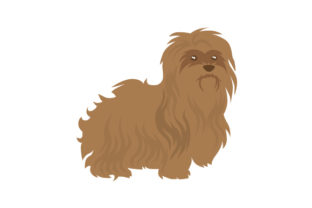
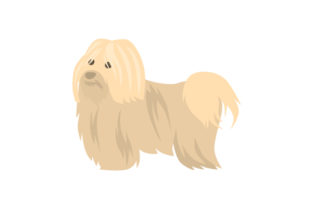
When I opened the White Havanese Dog embroidery file, my first thought wasn’t “cute”—it was “usable.” That’s rare. So many dog designs lean into cartoonish exaggeration or overly fussy detail, but this one lands with quiet confidence: a soft profile, gentle curve of the ear, subtle muzzle definition, and just enough negative space to breathe on fabric. It feels like a design made *for* embroidery—not just drawn and converted. The silhouette is balanced, neither too tall nor too wide, which means it scales well across common hoop sizes without distortion.
Where This Design Truly Shines in Real Projects
I tested White Havanese Dog as the centerpiece for a custom embroidered linen tote bag—intended for a local dog rescue’s fundraising boutique. The result? Instant warmth. Customers paused at the display, smiled, and asked, “Is that a real Havanese?” That tells me something important: the design reads clearly at 3–4 inches wide, holds personality without relying on color, and translates beautifully into stitch. It works equally well on a lightweight cotton sweatshirt (using light tear-away stabilizer) and on a structured twill apron (with medium cut-away). As an embroidered patch, it stitched cleanly with crisp satin-stitched edges and no thread nesting—even on the inner curve of the ear.
For baby embroidery—think onesies, burp cloths, or nursery pillows—the White Havanese Dog avoids sharp angles or tiny features that could snag or irritate delicate skin. Its rounded forms and open layout allow for smooth fill-stitch transitions and low stitch density in key areas, making it comfortable against sensitive skin and durable through repeated washing.
What to Watch For: Practical Limits & Smart Adjustments
This isn’t a one-size-fits-all design—and that’s a good thing. Its charm lives in its simplicity, but that also means it doesn’t carry well below 2 inches in width. On a curved surface like a cap front, I recommend keeping it under 3.5 inches and using a flexible stabilizer to prevent puckering around the muzzle curve. On dark fabric, test your thread colors carefully: white or ecru thread can fade visually unless paired with a subtle underlay or slightly higher stitch density in the outline.
Thin or stretchy fabrics—like jersey tees or lightweight rayon—need extra attention. The design’s clean lines rely on stability; without proper cut-away or adhesive stabilizer, the satin stitch along the ear edge can shift or distort. And while the White Havanese Dog has no fine lettering or micro-details, the inner eye shape is small enough that it may blur on very dense knits or heavily textured weaves—so always run a test stitch on scrap first.
How It Elevates Your Handmade Product—and Your Customer’s Experience
As an Etsy seller, I’ve seen how much weight a single strong design carries in buyer trust. The White Havanese Dog looks intentional, not generic. It signals care—not just in stitching, but in curation. When used on a personalized gift (say, a tea towel monogrammed with a name + the dog), it adds emotional resonance without overwhelming the composition. It supports brand consistency for pet-themed boutiques or vet clinics looking for tasteful, non-clip-art branding assets.
It also performs well in digital contexts: the included SVG and transparent PNG make it easy to build printable mockups for social media or product listings. Because the shape is distinct but not overly complex, it renders crisply even in small thumbnails—helping your Etsy shop stand out in search results without needing flashy filters or overlays.
Designer Notes You’ll Actually Use
- Always stitch a test on your target fabric—even if it’s the same type you’ve used before. Thread tension, needle size, and machine calibration all shift subtly.
- Check contrast in black-and-white mockups. The White Havanese Dog relies on shape more than tonal variation, so ensure it reads clearly without color cues.
- Review stitch density before scaling up. If enlarging beyond 5 inches, verify that fill areas don’t become overly dense—especially in the body—unless you’re aiming for bold texture.
- Confirm licensing terms before selling finished items or bundling the digital embroidery file. The product listing includes SVG, transparent PNG, EPS, and DXF—but commercial use rights aren’t stated here, so verify directly with the source.
- Use proper stabilizer for your base: light cut-away for stable wovens, adhesive+tear-away for knits, and fusible for lightweight linens or napkins.
- Compare light vs. dark backgrounds. On black fabric, consider a narrow white outline or shadow underlay to lift the form—this design responds well to subtle enhancements.
Fitting Into Your Craft Business—Naturally
The White Havanese Dog fits seamlessly into a range of craft business models: as a standalone embroidery file for digital product sellers, as a core motif for holiday embroidery kits (pair it with paw prints or bone motifs), or as part of a curated collection for dog lovers—think “Breed Series” bundles for Etsy shops. It’s especially effective for small shop merchandise where handmade authenticity matters: think embroidered kitchen towels sold at a farmers’ market, or custom pillow covers for a boutique’s seasonal launch. Because it avoids trend-chasing clichés, it stays fresh across seasons and customer age groups—from teens buying pet-themed caps to grandparents ordering personalized baby blankets.
Final Thought: A Design That Works—Not Just One That Looks Nice
In my 12 years reviewing embroidery files for studios and small makers, I’ve learned that the most valuable designs aren’t the flashiest—they’re the ones that stitch reliably, scale predictably, and connect emotionally without over-explaining. The White Havanese Dog does exactly that. It’s not trying to be everything. It’s quietly excellent at what it is: a friendly, flexible, professional-grade machine embroidery design built for real projects, real customers, and real creative work.