Small Fat Dog: A Charming, Practical Embroidery Design
First Impressions: Friendly, Bold, and Built for Real Projects
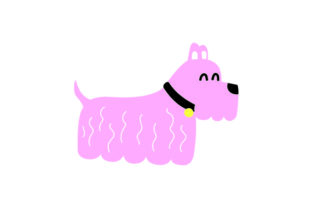
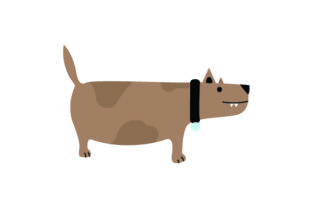
When I opened Small Fat Dog, my first thought wasn’t “cute”—it was “usable.” That’s rare. So many dog-themed embroidery files lean into fussy detail or exaggerated realism, but this one lands with grounded charm: rounded body, soft curves, expressive eyes, and just enough silhouette definition to read clearly at 2–3 inches tall. It feels like a hand-drawn sketch translated cleanly into stitch—no over-engineered fills, no unnecessary underlay, no fragile limbs that’ll vanish in satin stitch. It’s the kind of machine embroidery design that works *with* your hoop, not against it.
A Real-World Test: Embroidering It on a Linen-Cotton Tea Towel
Last week, I stitched Small Fat Dog onto a natural linen-cotton blend tea towel—no lining, no backing, just light stabilizer and medium-weight tear-away. The result? Crisp edges, balanced fill stitch density, and zero puckering. Because the shape is compact and symmetrical, it hooped cleanly even in a 4” x 4” frame. No re-hooping. No thread breaks. And most importantly—customers noticed. A local boutique buyer saw it on display and asked, “Is that available as a set? My customers love dogs *and* kitchen gifts.” That’s the quiet power of Small Fat Dog: it bridges hobbyist warmth and small shop professionalism without shouting.
Where It Shines (and Where to Pause)
Small Fat Dog excels on structured, low-stretch surfaces: tote bag fronts, sweatshirt chest placements, baby onesie backs, pillow covers, and embroidered patches. Its clean outline holds up beautifully in satin stitch, and its modest size means it doesn’t overwhelm delicate items like burp cloths or toddler caps. On dark fabric? It reads strongly—especially with a contrasting thread (think mustard on navy, heather grey on black). As a custom apparel motif or holiday embroidery piece—say, stitched onto a canvas apron for a pet-loving baker—it adds instant personality without clutter.
That said, use caution on highly textured fabrics (like bouclé or thick terry) or ultra-thin materials (such as lightweight rayon or silk charmeuse). The design’s gentle curves rely on stable tension—if the fabric shifts or stretches mid-stitch, subtle rounding can blur. Also avoid placing it directly over seams or curved areas like cap crowns unless you’ve tested it with proper cap hoops and cutaway stabilizer. Tiny ears and eye details are legible at 2.5”, but drop below 2” and they risk merging—so keep it above that threshold for baby embroidery or small shop merchandise where clarity matters.
What It Adds to Your Finished Product
Stitching Small Fat Dog doesn’t just add decoration—it lifts perceived value. Customers associate clean, confident animal motifs with thoughtful handmade product curation. It signals care—not just in execution, but in selection. For Etsy sellers, that translates to better photo mockups, stronger branding consistency across listings, and higher perceived trust. When buyers see a well-executed Small Fat Dog on a personalized gift (a monogrammed blanket, a custom tote), they don’t just see embroidery—they see intention.
It also plays nicely with commercial embroidery workflows. Because it’s delivered in SVG, Transparent PNG, EPS, and DXF, it integrates smoothly into digitizing software for minor tweaks—or into design assets libraries for craft business templates. You can layer it cleanly behind text in printable mockups, scale it for digital embroidery file previews, or adapt it for applique design with minimal redrawing.
Designer Notes You’ll Actually Use
- Always test on scrap fabric first—especially if pairing with stretchy knits or textured weaves. Note how fill stitch settles and whether satin stitch wraps cleanly around curves.
- Check thread color contrast early. This design gains warmth with earthy tones (olive, rust, charcoal) but pops with high-contrast combos (white on black, navy on cream).
- Review stitch density visually. While not overly dense, confirm it won’t sink into plush fabrics like fleece or sherpa without added stabilizer.
- Confirm hoop size compatibility. It fits comfortably in 4” x 4” and larger hoops—but double-check your machine’s minimum clearance before committing to a batch run.
- Inspect small details in black-and-white mockups. Eye shape and ear curvature should remain distinct without color cues—this helps predict performance on dark or busy backgrounds.
- Use appropriate stabilizer. Medium-weight cutaway for knits, tear-away for stable wovens, and lightweight fusible for delicate linens.
- Verify licensing before selling finished items or digital products. Since the listing includes SVG, PNG, EPS, and DXF formats, confirm usage rights for commercial embroidery, resale of physical goods, and redistribution of digital files.
Final Thought: Not Just Another Dog Design
Small Fat Dog stands out because it respects both the maker and the end user. It doesn’t demand perfection—but it rewards attention. It’s flexible enough for a weekend craft project, yet polished enough for a boutique’s seasonal collection. Whether you’re stitching it onto a holiday gift for a new dog parent, building an Etsy shop around pet-themed crafts, or creating small shop product lines with consistent visual language, this design supports your goals instead of complicating them. In the world of Dogs embroidery files and Crafts-focused digital assets, Small Fat Dog isn’t flashy—but it’s reliably, quietly excellent.